
Ortler Circuit Ski Tour - Italy
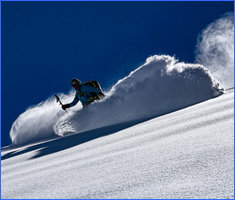
Tour: Ortler Circuit Ski Tour
Range: Sulden, Italy in Southern Tyrol
2027 Dates
- March 15-20, 2027
- March 22-27, 2027 (6 spots left)
- March 29 - April 3, 2027
- Custom Dates Also Possible
| Cost: |  |
$3150 |
Ready to Sign up?
REGISTER ONLINE NOW
»
Cost Includes
6 days skiing with IFMGA/UIAGM guides, 1 night lodging in Bormio before trip w/ breakfast included, 5 nights lodging in mountain huts with standard dinner and breakfast.
»
Cost Does Not Include
Skiers rescue insurance, travel to/from start point, drinks & lunches in huts, any town meals (unless specifically as included).
Expedition PDFs
Equipment List »


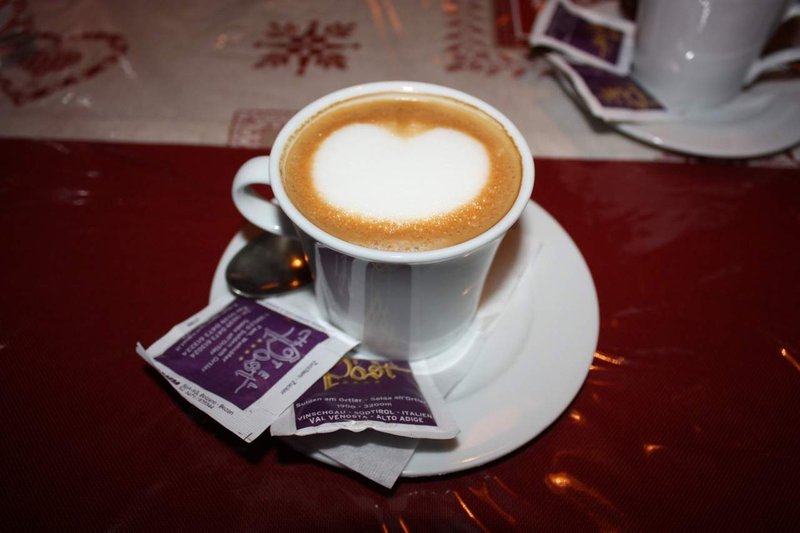
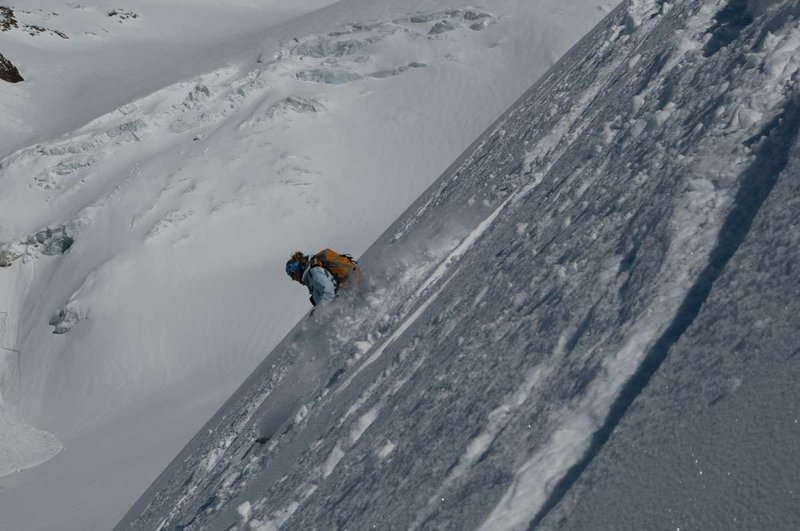
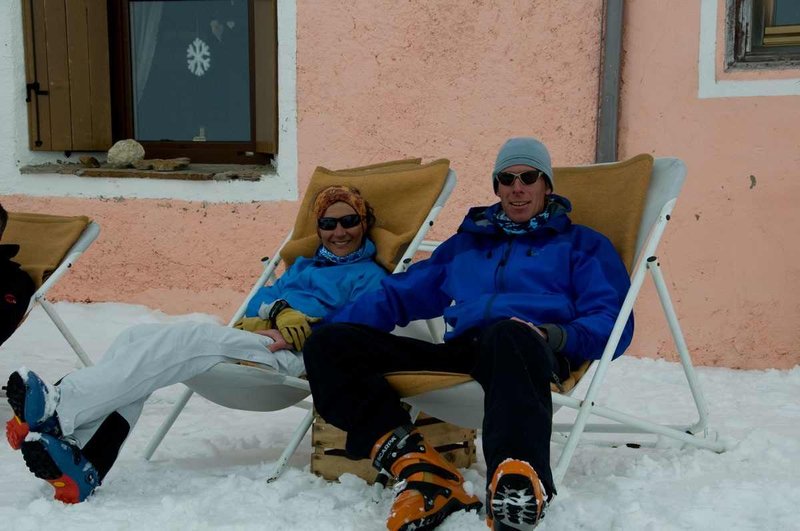
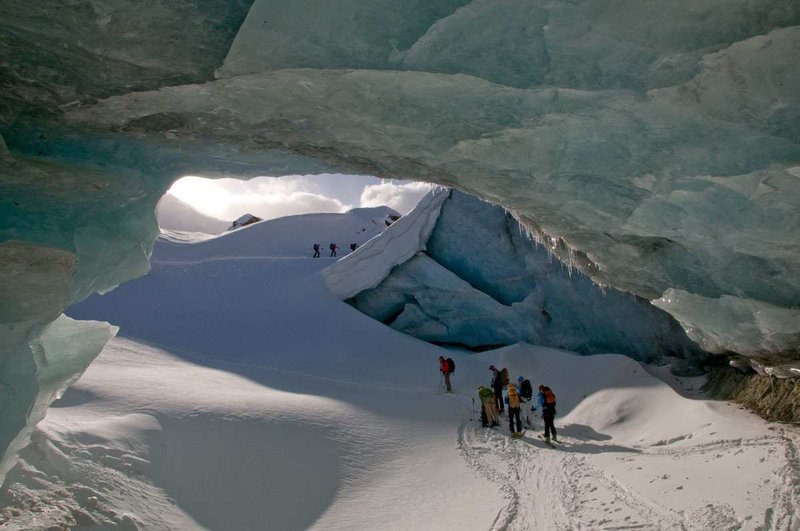
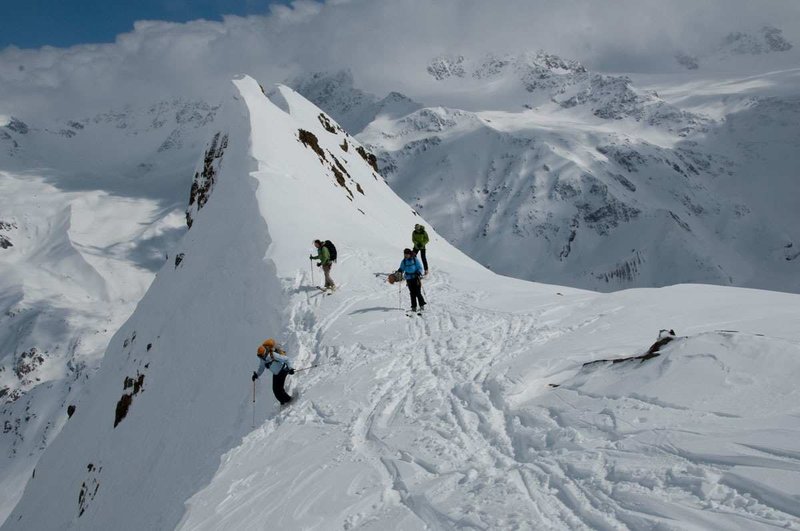
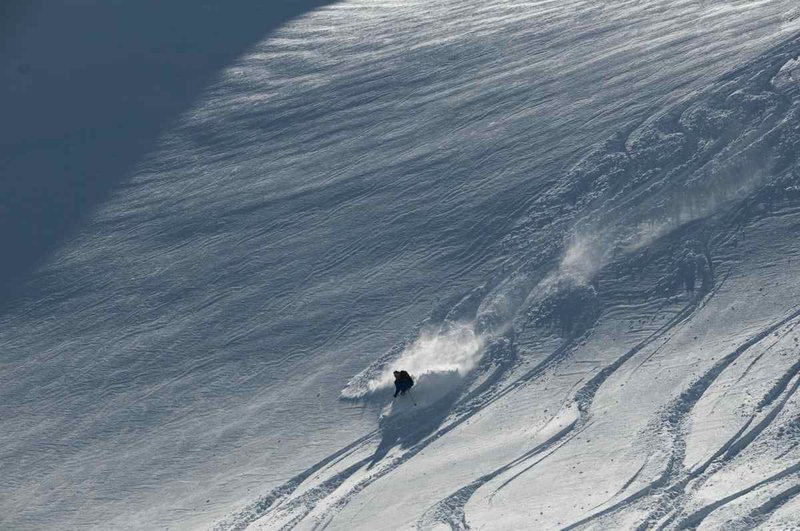
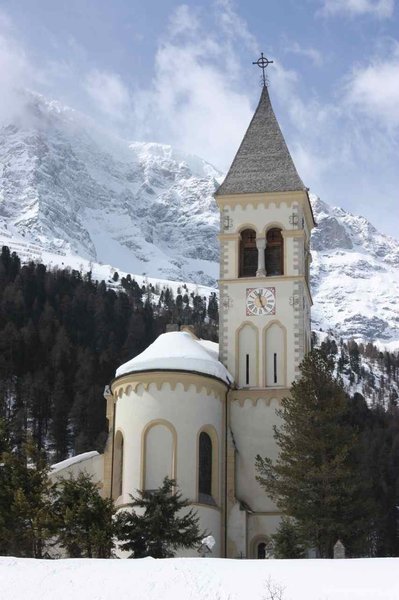
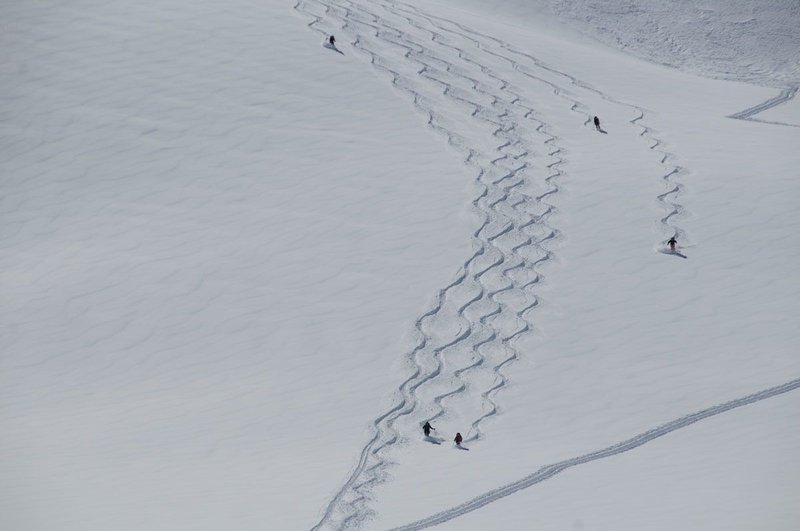
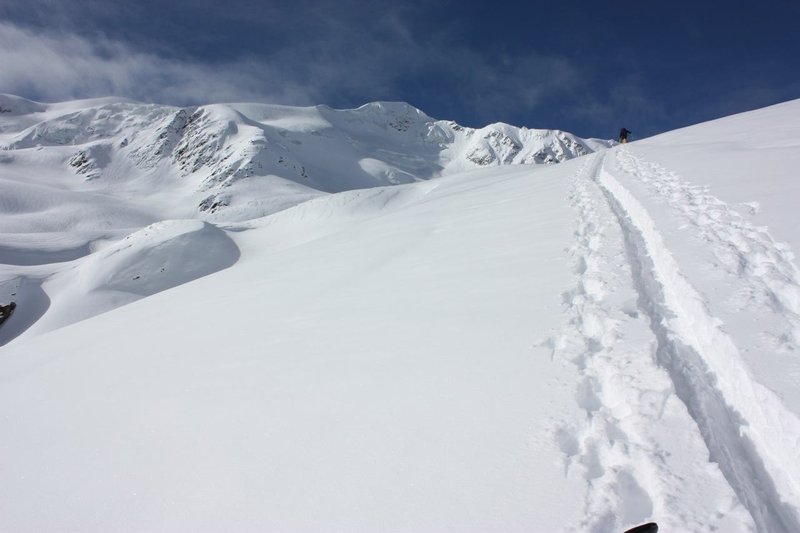
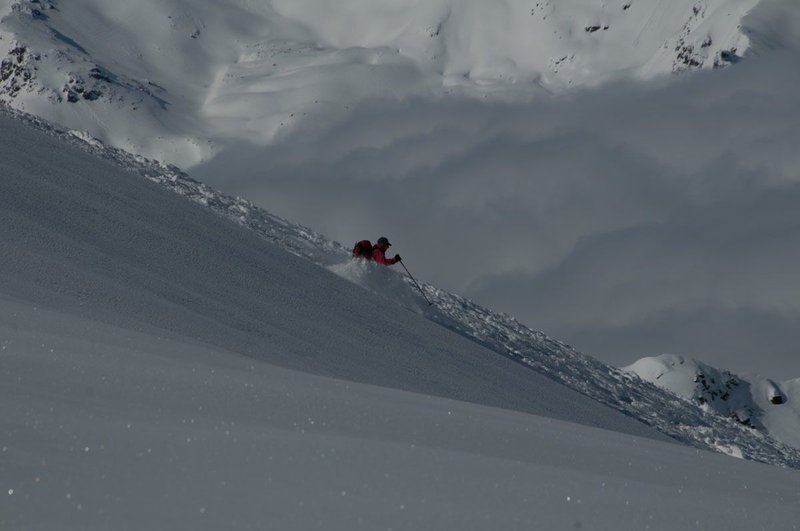
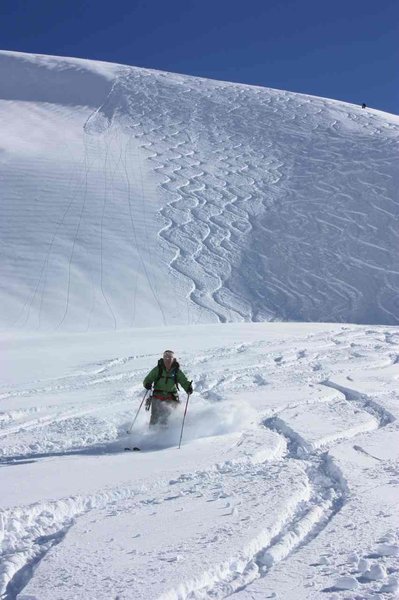
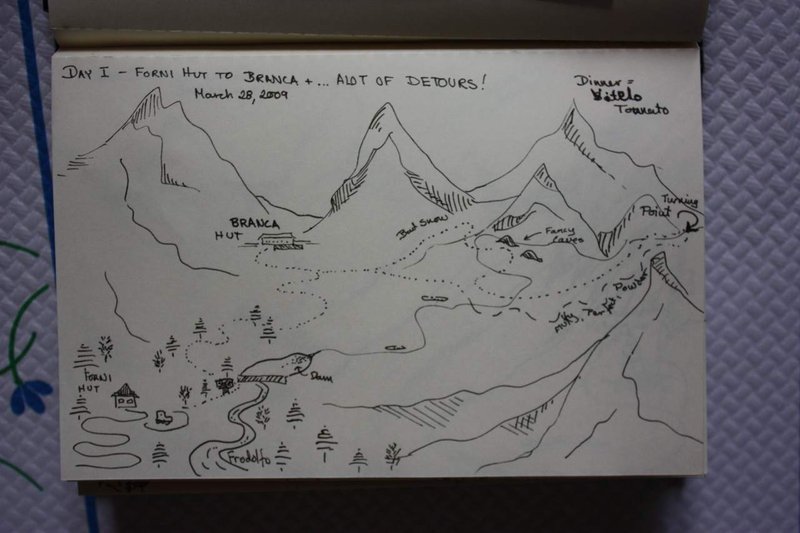
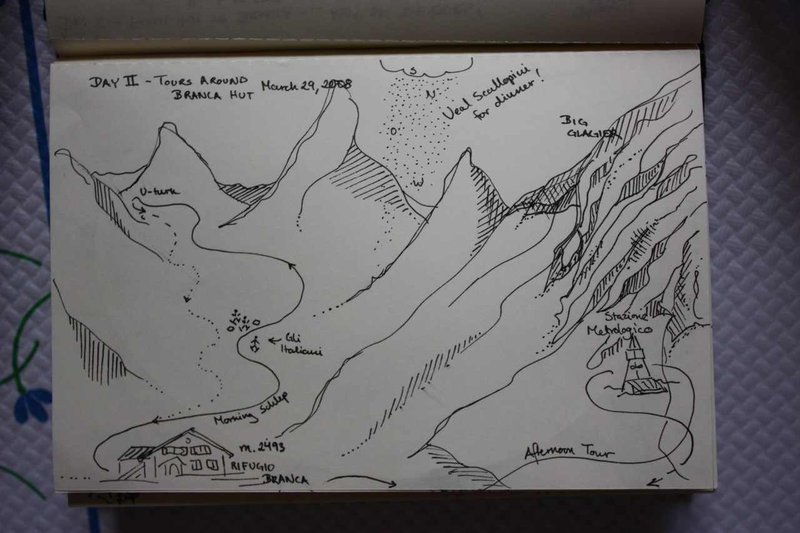
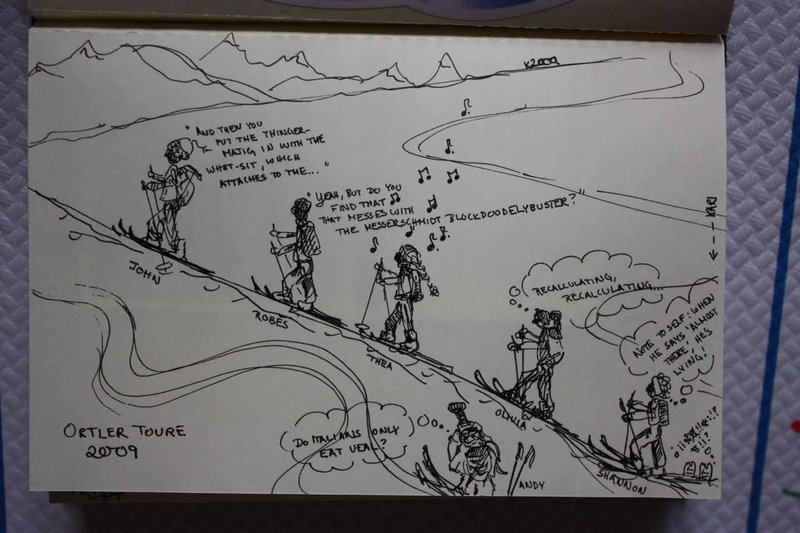
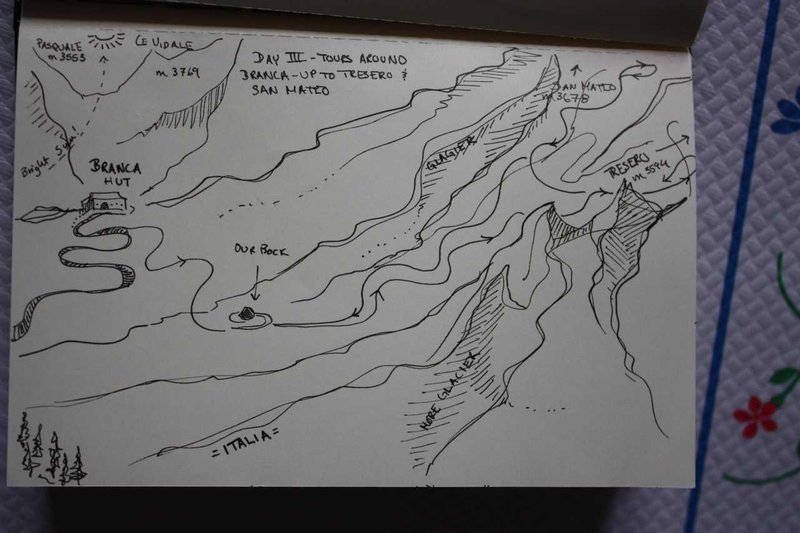
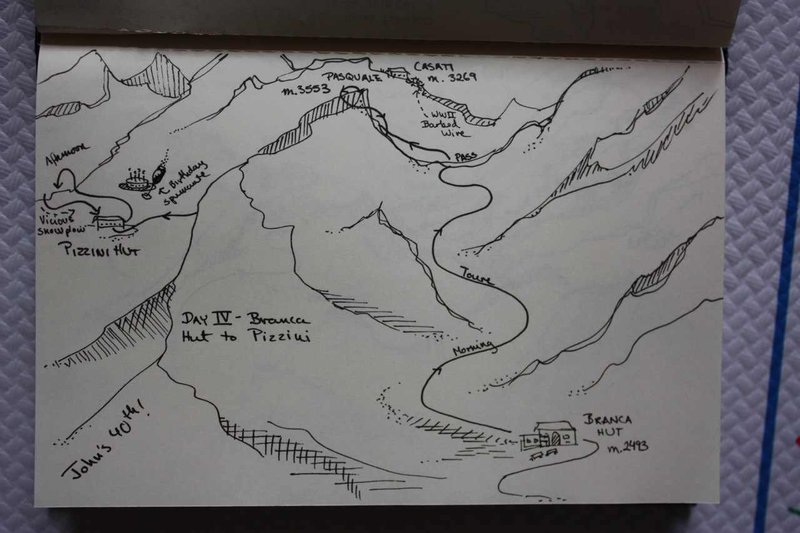
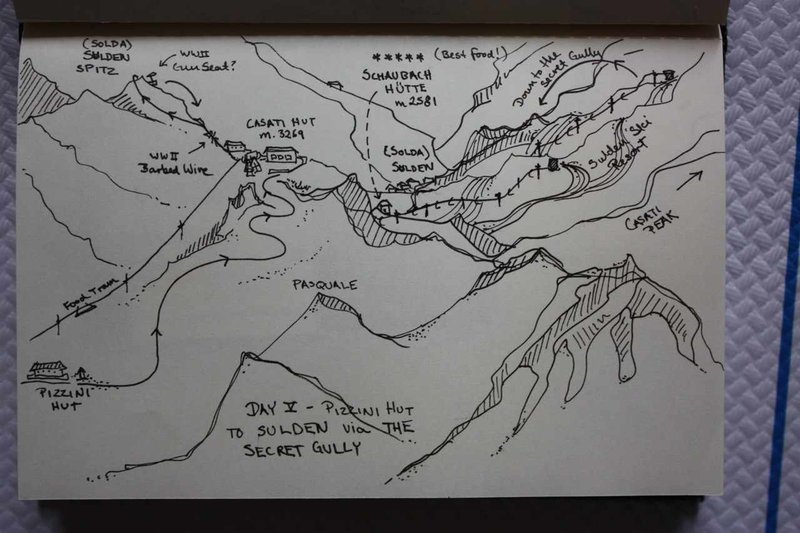
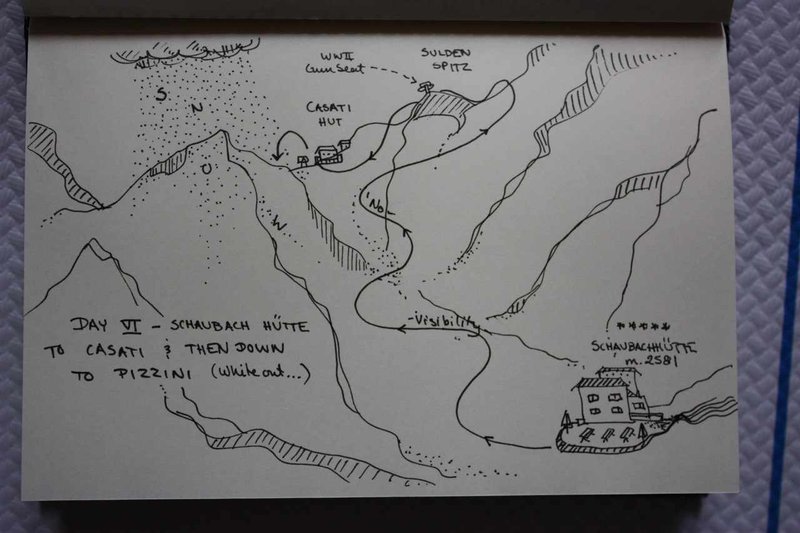
The Cevedale-Ortler area is located between St. Mortiz, Switzerland and the Italian Dolmites in North-Eastern Italy. To the north, German is spoken, to the south Italian, thus you often see mountains and glaciers given two names, one in each language. Unlike our Haute Route trips, the Ortler Circuit is not so much a traverse, but is rather a loop in the southern corner of the Tyrol region that hops from hut to hut in search of prime skiing and spectacular scenery, connecting what might be the most enjoyable huts in the Alps. The Ortler ski tour takes place within Stelvio National Park, and starts above the town of Santa Caterina di Valfurva, travels in a circle through the mountains, and then ends again in the same place almost a week later.
The fact that the trip forms a large loop simplifies logistics when compared to a point-to-point trip such as the Haute Route. The Ortler Circuit winds thorough peaks that are just under 4000 meters and as a result the area tends to be less traveled than regions of the Alps dominated by 4000 meter peaks. The National Park at the center of this tour holds 14 summits higher than 3000 meters, with the Ortler being the highest at 3905m.
Our Ortler Circuit Ski Tour is similar in difficulty to our Haute Route Traverses from Chamonix to Zermatt. Much of the ski terrain is glaciated and those with some mountaineering experience will feel more comfortable taking part in optional peak ascents that abound in the area. This trip offers the possibility of true ski mountaineering as the nature of many of these high peaks can be reached on skis or by short sections with crampons and many can be descended on skis. For those less interested in skiing off peaks, there is endless opportunity for ski touring without the added mountaineering aspects.
Guided Ortler Circuit Ski Tour Itinerary
Ortler Circuit Day 0: Meet in Bormio, Italy.Meet in Bormio at our hotel at 5 PM for a trip orientation followed by a group dinner.
Ortler Circuit Day 1: Start at Rifugio Forni where the road ends, night at the Pizzini Hut (2700m).
Drive/taxi to end of road, at the Rifugio Forni (above the village of Santa Caterina de Valfurva). We generally skin up in the morning, drop some gear in the ski room, and then spend the day touring above the hut.
There are several good afternoon tour options in this zone including a ski from the Col Pale Rosso. Ski descents under the south face of the Gran Zebru generally offer long, corn skiing, and are ideal for an afternoon tour.
The Pizzini is a comfortable hut with hot showers, a sauna, and a bar area that is generally full of happy Italians unwinding after big days in the mountains.
Ortler Circuit Day 2: Start at Pizzini Hut, tour up and over the Suldenspitze, and onto the Zufallhutte (2250m) for the night.
This day will take us onto and over the ridge that was the front between Austria and Italy in WWI. Today both sides of the ridge line are Italian but German is still the primary language on the northern side. As we gain the ridge we will skin past barbed wire and other fortifications that tell the tale of a different time in this area.
Transitioning from the south to the north side of this ridge covers glaciated terrain and will require stable weather & conditions. There are several different ways to move from the Pizzini to the Zufall hut, including dipping into the Solden ski area for some lift assisted touring. In good weather this day can provide for lots of exercise, excellent north facing ski descents and possibly a mid-day cappuccino.
From the top of the Solden ski area we cross over the Passo del Madriccio at 3123m. This sets us up for a beautiful 900 meter east and then north facing descent all the way to the Zufalhutte (2265m).
In less than ideal stability we sometimes skip the north side of the ridge in favor of additional nights at the Pizzini or Branca. While all this sounds complicated, the way the huts are arranged allow for some flex in the schedule, which means we can continue to get in good skiing even during most storm systems.
Ortler Circuit Day 3: Start at Zufall Hut and end at Marteller Hut (2610m).
From the Zufallhutte it is a short climb, about 300 meters, up to the Marteller Hutte (2610m). This corner of the Ortler has a more remote feel with plenty of options for afternoon tours.
After dropping our overnight gear we generally make a big climb up one of the peaks behind the hut and enjoy a long ski descent back to the hut for the evening. The Marteller is a bit smaller than the other huts and is always fun to visit.
Ortler Circuit Day 4: Start at Marteller Hut and end at Branca Hut (2470m).
A big climb up the Cevedale Glacier in the morning will bring us back to the dividing ridge line. Along the way we will pass massive cannons left over from WWI. At 3774m Cevedale is one of the dominant peaks in the range and an optional summit is the icing on the cake for this day.
From here we can descend the upper Cedec glacier, which we will have viewed from the Pizzini zone a few days earlier. This descent is one of the most photogenic of the tour. This will put us in position to make our way to the Branca Hut (2470m) our final hut for the trip, and one of our favorites.
Ortler Circuit Day 5: Day tour out of the Branca Hut (2740m).
We spend at least 2 nights at the Branca as there is so much skiing to be done out of this well situated hut. When the weather gets rough we occasionally spend a 3rd night as there is easily 5 days worth of touring here and it also sets you up for an easy drop to the car in even the worst weather.
Tour options from the Branca include the Pizzo Tresero (3595m), Punta San Matteo (3678m), Palon de la Mare (3704m), Monte Pasquale (3553m) or Cima Branca (3100m). On many of these peaks we ski to very close to the summit, stash our skis, and then put on crampons for the final short climb to the top.
After a full day of touring we return to the Branca for après ski on the patio and a wonderful multi-course dinner.
Ortler Circuit Day 6: Start at Branca Hut and then finish at the cars.
On our last day a tour up Cima San Giacomo (3277) or Cima del Forno (3248m) will set us up for a fun descent back to the starting point of the tour.
We generally shoot to be out to the trailhead by early afternoon, at which point we have a group lunch, share one last espresso, and begin the drive back out to Milan or Switzerland.
Or better yet, back to Bormio for an evening trip to the Roman baths! These now modern baths have a long history - they were mentioned in Ancient Greek histories by Pliny the Elder, visited during the Enlightenment by Leonardo da Vinci and today they are the best way we know to relax muscles which are pleasantly tired after a week of ski touring. Soaking in hot water/steam followed by an Italian spa lunch or happy hour - life doesn't get much better than this!
Ortler Circuit Ski Tour Qualifications
Ski Ability: The Ortler Circuit is not an extreme ski route in any way. It does, however, require participants to be decent skiers. Things you should feel comfortable doing include: skiing with a backpack, skiing a wide variety of snow ranging from powder to breakable crust to corn, and climbing and descending 3500-4500' each day on skis for a week. It is not advised to undertake the Ortler Circuit without any experience outside of a ski area. You will want to do some AT skiing in advance of the Ortler Circuit and will want to show up having used your boots in the time prior to the trip.It is not uncommon for people to develop very bad blisters if they go from not touring at all to putting in successive long ski touring days. You should be able to efficiently get down black diamond runs in most ski areas. Again, you do not need to be an extreme skier to do this, but there will be spots where it is best not to fall, and you need to be able to efficiently link turns in a wide variety of snow conditions. You should also be aware that skiing on a glacier is much different from skiing in bounds at a ski area. Real hazards exist in these mountains and none are marked. Prior to your trip you want to focus on skiing in control and being able to ski for long periods without falling. You do not need any previous mountaineering experience to do this, but it is nice to have some level of familiarity with the climbing harness, crampons, and ice axe. We use these items very rarely, but you will be more confident if you show up with some level of comfort with them.
Ski Skills Assessment
It can be difficult to determine where different people are in terms of ski ability without skiing with them in advance of a program. As we don't always have the opportunity to ski together in advance of all trips we have provided the following list so that potential customers can evaluate their ski skills and choose the most appropriate program.Advanced Ski Skills
- Able to ski fall line in most snow conditions (powder to wind affected snow).
- Able to make parallel or stem-christie turns on 35° groomed or firm snow.
- Able to side-slip on firm slopes up to 40°.
- Able to ski moguls in soft snow.
- Able to do kick turns facing in or facing out on 30° slopes.
- Able to skate on level terrain.
- Able to ski fall-line in tight radius turns in good conditions.
- Able to ski black diamond runs at ski areas efficiently and in most snow conditions.
Physical Condition Evaluation for Skiing
Ski touring requires a certain basic level of physical fitness to minimize risk and be enjoyable. In addition to a solid base of aerobic conditioning you need to have the basic core strength to ski in a variety of conditions while carrying a ski pack. The best training you can do for ski touring is ski touring. It is best not to go into any extended trip without finding the time to get in a few days of touring in advance to make sure that your feet are conditioned to your boots.Very Good Physical Condition
Full day tours with 3000-4500 feet of elevation gain while carrying a pack weighing between 20 and 30 lbs. on tours lasting 3-6 daysHow do the huts work?
In most of the huts we are given dormitory style lodging. Different people have different opinions of hut living. Most nights we are in bed by 9 p.m. and most mornings we are up by 6 am. Dinners are things like pasta, meat, potatoes, a desert, bread, and soup. Breakfast is generally a very simple affair consisting of bread and jam, coffee or tea, and cheese and is designed to get large numbers of people fed and out the door. You purchase water in the huts and it can be surprisingly expensive. In general expect to spend about $4.25 USD for a liter of water. You can often buy boiled water (made from melted snow or collected rainwater) for about half this. For most huts the supplies are flown by helicopter and thus cost seems to correlate to weight as much as anything.What do we do in the huts?
On some of the days there can be an option for an earlier finish or a longer day of touring. Those opting for the shorter day can stop at the hut for a hot lunch, napping, cards, or reading in the afternoon prior to dinner. Those opting for more turns will continue skiing. Some days the whole group will be at the hut in time for a hot lunch, always a welcome treat and a good way to make up any caloric deficits. After dinner everyone puts in breakfast orders, we settle our bill with the hut manager, and retire early in preparation for an early start.Luggage
You may store luggage at the hotel. We have never had an issue with gear going missing but you should be aware anything left in the hotel will be stored in a room which others will have access to while we are away. It is important to keep this in mind when you are deciding whether or not to bring a laptop/ipad etc. Bringing a small lock will help to add some security your bag. When we travel to Europe we generally take a large wheeled duffle bag (Patagonia Freightliner Max Bag) and a wheeled ski bag. By splitting our gear between the duffle and the ski bag we can keep bag weights down for the flight and generally avoid excess baggage fees. Once in Europe the wheeled bags are easier to pull on and off trains, through town, etc. The lighter you go the happier you will be, so pack very carefully.Insurance Considerations
There are several different types of insurance to consider. Travel insurance can protect all of your non-refundable trip expenses (i.e. guide fees, airline reservations, etc) and in some cases might also provide some rescue insurance. NMS does not carry rescue insurance for its guests. We do carry commercial liability insurance, but you are responsible for the cost of your evacuation if injured.There is huge variability between insurance policies and providers, and even within policies depending on your residence and citizenship. All of the information provided in this document is only meant to help you start to educate yourself about insurance. It is your responsibility to select the products that provide the amount of coverage that you are comfortable with.
Once you have purchased travel insurance please pass this information on to the NMS office. Also make sure to CARRY YOUR PROOF OF INSURANCE DURING THE TRIP.
Travel Insurance
In addition to providing you with protection should you have to cancel your trip unexpectedly, some travel insurance policies can cover many other aspects of your trip itself. Examples of possible additional coverage include search & rescue for accidents, medical expenses while traveling, and allowances for lost or delayed luggage.Family Tour
Over the last 2 years we have travelled extensively with our kids, aged 9 & 13 at the time. During our trip we sailed across the Atlantic, trekked to 17,600', ran class 4+ whitewater in Nepal, mountain biked the White Rim, Pack-rafted for 14 days on a river north of the Arctic circle, completed an 8-day canoe loop in Katmai national Park, sea-kayaked for 8 days in Glacier Bay National Park, climbed hundreds of pitches of rock, and of course hiked a lot.We are planning to complete the Ortler Ski Circuit with our kids on their Spring Break in 2026 and would be happy to add other families with kids in middle school or high school. We will both be guiding this trip. Our kids will be 11 & 14 at the time and our objectives will be shifted a bit considering that these are our kids. That said, the kids are generally not the weak link, so it might end up looking like usual tour. We don't take risks with adults that we would not take with our kids, but do find that kids have a lower tolerance for really huge days. We will have a special screening process for the trip and at least one parent would need to accompany any youth participants. Reach out if any of this interests you.
Rescue Insurance
If your travel insurance does not provide rescue insurance you may need to consider adding some other policy to cover this. The list below is by no means comprehensive but should give you a starting point for looking into this. In Europe the cost of rescue is payable on the spot (unlike the US), and can be very expensive.Austrian Alpine Club: This provides a good rescue insurance option. Most American's that go this route purchase their insurance through the UK branch of the Austrian Alpine Club. Cost for 2013 was £43.50 for those born between 1953 and 1987, £33.50 for those born before 1953, and lower amounts for people born from 1994 onward. There is also a family membership. Last we checked this covered you in Austria for the year enrolled as well as worldwide up to 6000 meters.
We generally advise folks to cary a trip cancellation policy for their primary cancellation or trip interruption insurance and then back this up the Austrian Alpine Club membership. Please note that while we work hard to provide good advice here and in our pre-trip information it is ultimately your responsibility to obtain insurance, understand the policy, and decide for yourself how much insurance you need. As we have gotten older and are now parents we have noticed that we prefer to carry more insurance than we used to.
Getting to the Ortler Ski Tour
When you register for your trip we will contact you will complete details about how to best get to Santa Caternia di Valfurva. Many people fly into Milan and then rent a car and drive to the area. We have come to favor coming in from Switzerland as it is cheaper to rent cars there and it allows you to side step the craziness of Milan. If coming in via Switzerland we recommend arriving in Geneva or Zurich and then meeting up with the guides in Visp, Switzerland. From here we drive by car to Santa Caterina via Bormio. There is a public transit option from Milan. If coming from Milan we generally share a car rental. The public transit option utilizes a train from Milan's central train station to Tirano, and then takes a bus from Tirano to Santa Caterina, followed by a taxi to the hotel near the trailhead. We generally push to have the group share rental cars as it eases the travel. Train travel in Italy is not quite as smooth as train travel in Switzerland. Our office will help you with the travel details and will make rental arrangements. When renting cars we split the cost among all those utilizing this. It usually costs around $125 to $150 per person for their portion of the car and the fuel.Recent Ortler Ski Circuit Trip Reports

