
Aconcagua Expedition - False Polish (Guanacos Variation)
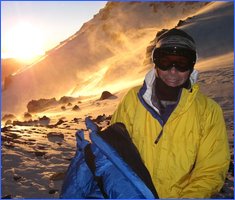
Mountain: Aconcagua (22,841'/6,962m)
Route: False Polish
Dates:
- Nov 21 - Dec 20, 2026
- Call 509-548-5823 for details
| Cost: |  |
$11,500 (4 clients / 2 guides) |
Ready to Sign up?
REGISTER ONLINE NOW
»
Cost Includes
Guide fee, mule transport of personal gear to/from Plaza Argentina, mountain dinners and breakfasts, ground transportation between Mendoza and mountain, tents, stoves, fuel, group climbing equipment, 2 nights lodging in Mendoza based on double occupancy.
»
Cost Does Not Include
Individual Aconcagua climbing permit (800-900 USD depending on season), air transportation to/from Mendoza, personal climbing equipment, lunch food, wine or inch thick grass-fed beef (the beef will cost you about $5-$10 USD for something roughly the size of a small football.) Optional base camp amenities such as beer, pizza, and showers and use of the satellite phone ($2.50 per minute).
Client to Guide Ratio: 2:1




Aconcagua Expedition Summary
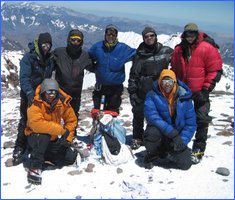
Aconcagua (22,841 feet/ 6,962 M) is the highest mountain in the Western Hemisphere and is one of the seven summits. This beautiful South American mountain sees a lot of traffic on the popular and crowded Ruta Normal, so we operate our trips on what is becoming known as the "360 Traverse," which combines the False Polish, Guanacos, and Ruta Normal routes and offers the most pleasant route to the summit.
The 360 traverse allows us to approach the much smaller Plaza Argentina via the Vacas Valley, and allows for an extra night to acclimatize on the way to basecamp. We follow the False Polish Route to Ameghino Col, then climb mild slopes to a high camp at 19,600', and finally join the regular route for the final climb to the summit. This allows for one additional camp compared to the usual Polish Glacier traverse route and positions us in a safer spot to deal with emergencies at high camp. Once the summit climb has been completed we are just a few hours from Plaza Mulas, which positions us for a spectacular hike out under the stunning South Face of Aconcagua.
Why climb Aconcagua with the Northwest Mountain School?
- Experience: John guided his first high altitude expedition in 1990, Olivia in 2001. After years of working for the leading companies in the US we decided to open our own business. Our Aconcagua record is 9/10, Denali is 26/32, Cho Oyu is 4/5, and we have a combined 250+ summits of Mt. Rainier.
- Certification: We are both IFMGA/UIAGM guides. This is a rigorous 5-year process of training and certification as rock, alpine, and ski guides. Olivia was the 3rd woman in the US to attain IFMGA status and there are still relatively few guides with this level of training.
- Equipment: Our trips are all outfitted with new or nearly new Mountain Hardware Trango 3.1 tents, a satellite phone, radios, SPOT devices, pulse oximeters, a solar charging system, and very good cooking equipment. We rent a covered tent at basecamp for group meals and provide a cook tent above basecamp.
- Philosophy: Since we began guiding in 1989 we have been drilled in the priorities of safety, success, and enjoyment and we believe deeply in this order. The main reason we run small groups is that past experience with larger groups has led us to the conclusion that we are most able to run a safe, fun trip that reaches the summit if we limit this to a small group experience. It adds some cost, but the rewards are worth it.
- Outfitter Support: All trips are fully supported by Grajales Expeditions, a local outfitter that has been involved in every trip we have organized. They handle hotel booking, airport pickups, transportation, radios, and mule transport, ensuring that we have the best local support possible. In the rare event that something goes wrong, this connection adds great strength to our ability to respond to emergencies.
- Price: Shop around. Our price is very comparable to other companies operating trips on Aconcagua led by US based guides.
We are very aware of who our competition is and what their standards are. We have both worked for most of the bigger US based guide services on Aconcagua and have nothing but praise for their operations. That said, we would not be offering our own trips if we did not believe that on average we can provide an experience that is equal or even better, particularly given the reality that we run fewer trips, leaving a bit more energy to invest in each season's offerings. We do this because we enjoy being on the mountain and spending time in Mendoza, but have stopped short of turning our operation into a machine for guiding Aconcagua. Some prefer this approach, others might be better off with more complex operation, but we have seen no increase in success with added quantity. We are happy to provide references from past climbers upon request.
Aconcagua Expedition Description
Your Aconcagua expedition begins when we meet in the lovely provincial city of Mendoza, Argentina. The founders of Mendoza had the forethought to build a series of canals to irrigate the city and then they planted trees along all the main streets, the result being an oasis in a desert surrounded by many excellent wineries. No trip to the area is complete without dining in one of the fine restaurants in Mendoza and sampling some of the world class Malbec, the wine that put Mendoza on the wine map. We start the trip by spending one night here, which allows us to recover from our flights to South America, to register for our climb, and to enjoy the good life that Mendoza offers.
Upon leaving Mendoza we drive several hours high into the mountains to the ski area at Penitentes, where we rendezvous with our outfitter, Fernando Grajales of Grajales Expeditions and our mule drivers. Here in Penitentes we spend an afternoon packing mule loads for the dusty three-day hike into base camp, enjoy one last steak and Malbec feast, spend the night, and then drive to the foot of the Vacas Valley - starting point of the trekking portion of our expedition. Over the next three days we climb from 7,600' to 13,800' making two camps in this austere, arid, and beautiful valley. This helps us acclimate with light packs, while the mules transport the bulk of our gear to the Plaza Argentina, base camp for our Aconcagua summit attempt.
From Plaza Argentina we begin a series of acclimation hikes and carries as we establish camps higher up the mountain. For additional fees you can hire local porters to help with your load, or you can choose to use the weight as preparation for your eventual summit bid, which usually occurs around 15 to 17 days after leaving the US. Porters or no porters, what is critical at this point is to walk and climb slowly, to take rest days, and concentrate on staying healthy.
We generally place camps at 16,200', 18,200', and 19,600' with the option of a higher camp if needed. Having the flexibility to customize the itinerary to fit the group is one advantage of a small group expedition. Once acclimated and established at our high camp we make our summit bid.
After 20+ years of guiding in Alaska and the Himalaya, we are always amazed at how strenuous and cold the summit day on Aconcagua can be. Most of the days leading up to summit day seem easier than similar days on peaks such as Denali, but the summit day levels all this out and is tough. Despite the difficulty, most people that make it to high camp go on to reach the summit. It is in the final climb that a low ratio between guides and climbers pays off as you are given very personal attention and coaching at the most critical stage of the trip
General Aconcagua Expedition Itinerary
Our Aconcagua climbing strategy is similar to our Denali strategy. We start the trip with a slow, relaxed climb to altitude and build in frequent rest days. Our itinerary has extra days built in which generally give us a sufficiently long summit window with which to wait out storms, minor illness, etc. We operate on the philosophy that it is far better to take a couple of extra days to get the job done the first time then to take another three weeks and try again next year. As we do all the scheduling and are a small company, you don't need to worry about vacating camp for the team behind you or your guides needing to be somewhere else.We do all of the cooking along the way and pack in a substantial kitchen for use at base camp. We have gotten very good at organizing a clean kitchen and camp scene after many years of living outside the US in mountain areas. Many illnesses that strike during a long expedition actually originate within the group and close attention to hygiene amongst the cooks is always worth the effort. It is often not the strongest climbers that reach the summit, just those who still have their stomachs intact.
We bring top quality mountaineering tents and stoves, and provide all group equipment. The mules are used to transport most of the group and personal gear to and from base camp and we plan carefully to keep things light.
Aconcagua Expedition - 360 Traverse Itinerary*:
Day 1: Leave US and fly to Mendoza, Argentina.
Day 2: Arrive in Mendoza in afternoon or early evening. (Night in Mendoza)
Day 3: Drive to Penitentes (8200') pack mule loads, and spend night.
Day 4: Drive to Vacas Valley (7,600'), hike to La Lena (8,850'). (7 miles/4-5 hrs.)
Day 5: Hike to Casa Piedra (10,500') (8 miles/5-7 hours.)
Day 6: Hike up Relinchos Valley to Plaza Argentina BC (13,800') (6 miles/6 hrs.)
Day 7: Rest Day at base camp.
Day 8: Carry to Camp 1 (16,200') (4-6 hours up) & return to base camp.
Day 9: Rest Day at Base camp.
Day 10: Move to Camp 1.
Day 11: Carry to Camp 2 (18,200') & return to Camp 1. (5 hours RT)
Day 12: Rest at Camp 1.
Day 13: Move to Camp 2.
Day 14: Move to Camp 3 (19,600')
Day 15: Possible Summit Day
Day 16: Possible Summit Day
Day 17: Possible Summit Day
Day 18: Possible Summit Day
Day 19: Descend to Plaza Mulas on Ruta Normal
Day 20: Complete hike out and return to Mendoza.
Day 21: Return flight to US
Day 22: Arrive in US
Day 2: Arrive in Mendoza in afternoon or early evening. (Night in Mendoza)
Day 3: Drive to Penitentes (8200') pack mule loads, and spend night.
Day 4: Drive to Vacas Valley (7,600'), hike to La Lena (8,850'). (7 miles/4-5 hrs.)
Day 5: Hike to Casa Piedra (10,500') (8 miles/5-7 hours.)
Day 6: Hike up Relinchos Valley to Plaza Argentina BC (13,800') (6 miles/6 hrs.)
Day 7: Rest Day at base camp.
Day 8: Carry to Camp 1 (16,200') (4-6 hours up) & return to base camp.
Day 9: Rest Day at Base camp.
Day 10: Move to Camp 1.
Day 11: Carry to Camp 2 (18,200') & return to Camp 1. (5 hours RT)
Day 12: Rest at Camp 1.
Day 13: Move to Camp 2.
Day 14: Move to Camp 3 (19,600')
Day 15: Possible Summit Day
Day 16: Possible Summit Day
Day 17: Possible Summit Day
Day 18: Possible Summit Day
Day 19: Descend to Plaza Mulas on Ruta Normal
Day 20: Complete hike out and return to Mendoza.
Day 21: Return flight to US
Day 22: Arrive in US
*Weather, group strength, and the normal ebb and flow of expedition life rarely allow us to run the same itinerary on two trips in a row. Our aim is to take plenty of time to acclimate and to have the option of multiple summit days. It is not unusual for a trip to end a day or two early, at which point we generally enjoy the good life offered by lovely Mendoza.
Use of Porters
Although it is possible to arrange porters for portions of this climb, participants should be able to carry some group load (50+ lbs total) or be willing to pay additional fees directly to local porters to have these loads moved.It is often possible for 2 climbers to share a porter to reduce their overall load, and it is possible to use porters for certain sections and then carry your own load for others. Porters are organized at basecamp, but we will need to know your plans prior to departure so that payment can be arranged. I our experience the use of porters does not increase your chance of reaching the summit as it makes the lower mountain easier, but does little to make the summit day easier. Your guide will be happy to handle porter arrangements for you.
Fees for porter loads are as follows:
- Plaza Argentina to Camp 1: $195 USD
- Plaza Argentina or Camp 1 to Camp 2: $320
- Plaza Argentina or camps 1 or 2 to Camp 3: $390
- High Camp to Plaza Mulas of Plaza Argentina: $390
Qualifications
All Aconcagua participants must be familiar with the use of ice axe and crampons and need to be in very good to excellent physical condition for this program. The climb is fairly straight forward up to the high camp and at times seems more like rigorous trekking. Once on summit day, however, the physical challenges, cold, and wind all increase and the final push is not easy. Participants are often surprised by the difficulty of the summit day as it is significantly more challenging than most other days of the trip. You cannot over train for this climb and need arrive ready for a big challenge at high altitude. Please contact us directly to discuss you training, physical conditions, and concerns about the trip. All participants must have the equivalent training of our 5-day Glacier Mountaineering Seminar.Related Aconcagua Posts from our blog:

